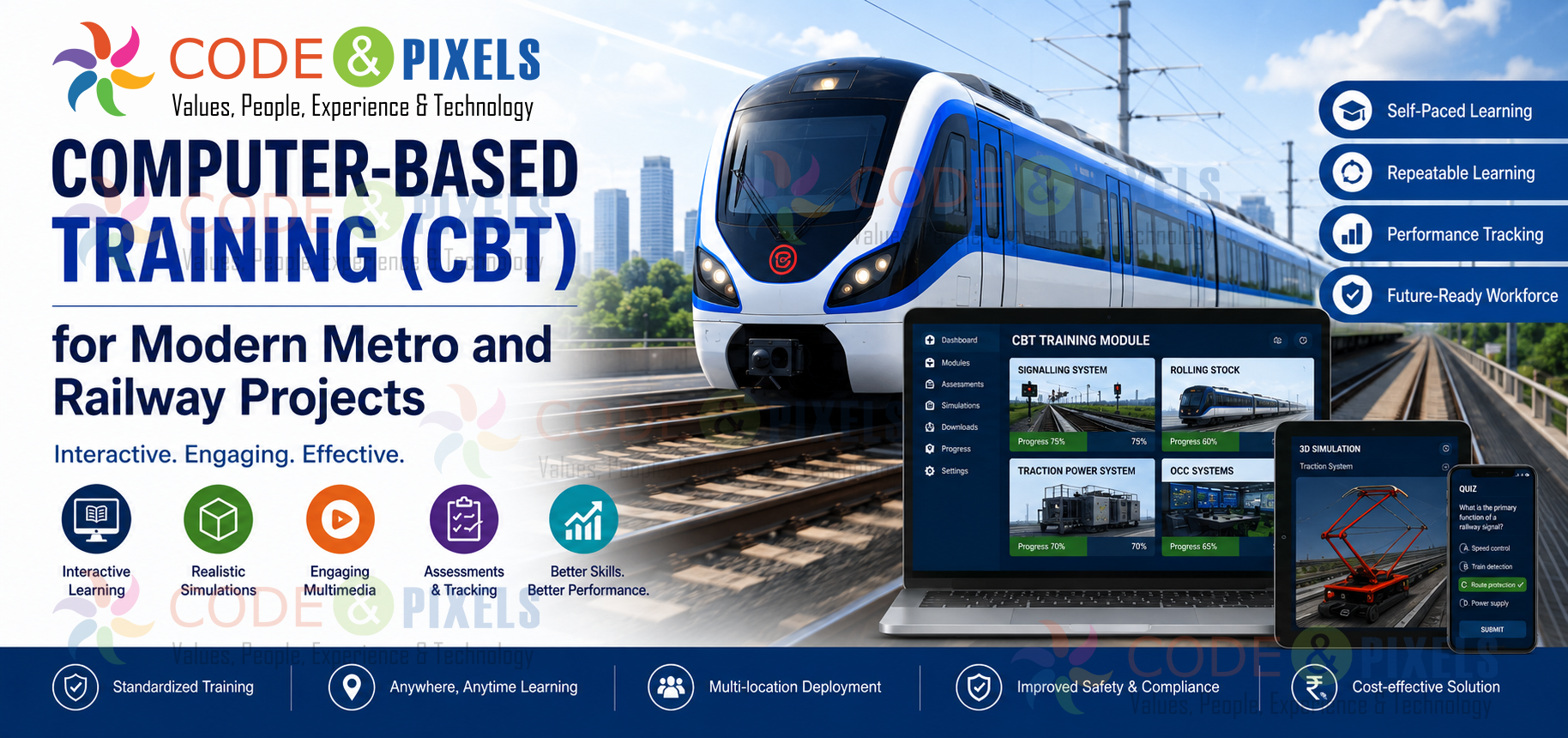
Railway Computer-Based Training (CBT): Benefits, Features and Applications
Modern Railway and Metro systems involve highly advanced technologies such as signalling systems, telecom systems, rolling stock equipment, traction systems, OCC operations, safety systems, depot machinery and maintenance workflows.
Training operators, maintainers, engineers and technical personnel using only traditional classroom methods is becoming increasingly difficult due to the complexity of modern railway infrastructure.
Computer Based Training (CBT) has emerged as a powerful and scalable learning solution that complements and, in many cases, enhances traditional classroom training methods.
What is Railway Computer-Based Training (CBT)?
Railway Computer Based Training (CBT) is a digital learning solution used to train railway operators, maintenance personnel, engineers, technicians and other railway staff on the operation, maintenance, safety and troubleshooting of railway systems. It combines technical knowledge with interactive multimedia technologies to create an engaging and effective learning experience for modern railway workforce training.
A Railway CBT system typically includes technical content, 2D graphics, 3D animations, simulations, videos, voice-over narration, interactive assessments and troubleshooting exercises. These features help trainees understand complex railway equipment, signaling systems, communication networks, rolling stock, power systems and operational procedures in a clear and practical manner. By providing visual and interactive learning experiences, Railway CBT improves knowledge retention, reduces training time, enhances safety awareness and supports workforce competency development.
Traditional Classroom Training in Railway Projects:
Classroom training has been widely used in railway projects for many years. Instructors explain technical concepts using presentations, printed manuals, diagrams and classroom discussions.
While classroom training remains useful for certain activities such as discussions, workshops and hands-on practical sessions, it also has several limitations when dealing with complex modern railway systems.
Let’s compare CBT vs Classroom Training
Computer Based Training (CBT) offers a more interactive, flexible and scalable learning experience compared to traditional classroom training. The table below highlights the key differences between the two approaches.
|
Feature |
Classroom Training |
Computer Based Training |
|
Learning Method |
Instructor led |
Interactive multimedia learning |
|
Visualization |
Limited static diagrams |
2D/3D animations & simulations |
|
Learning Pace |
Same for all trainees |
Self-paced learning |
|
Repeatability |
Limited |
Unlimited repeat learning |
|
Standardization |
Depends on instructor |
Fully standardized |
|
Accessibility |
Classroom dependent |
Multi-location deployment |
|
Troubleshooting Practice |
Limited practical exposure |
Interactive simulations |
|
Engagement Level |
Moderate |
Highly interactive |
|
Assessment Tracking |
Manual |
Automated |
|
Flexibility |
Fixed schedule |
Anytime learning |
|
Scalability |
Limited |
Easily scalable |
Why CBT is Important for Railway Projects:
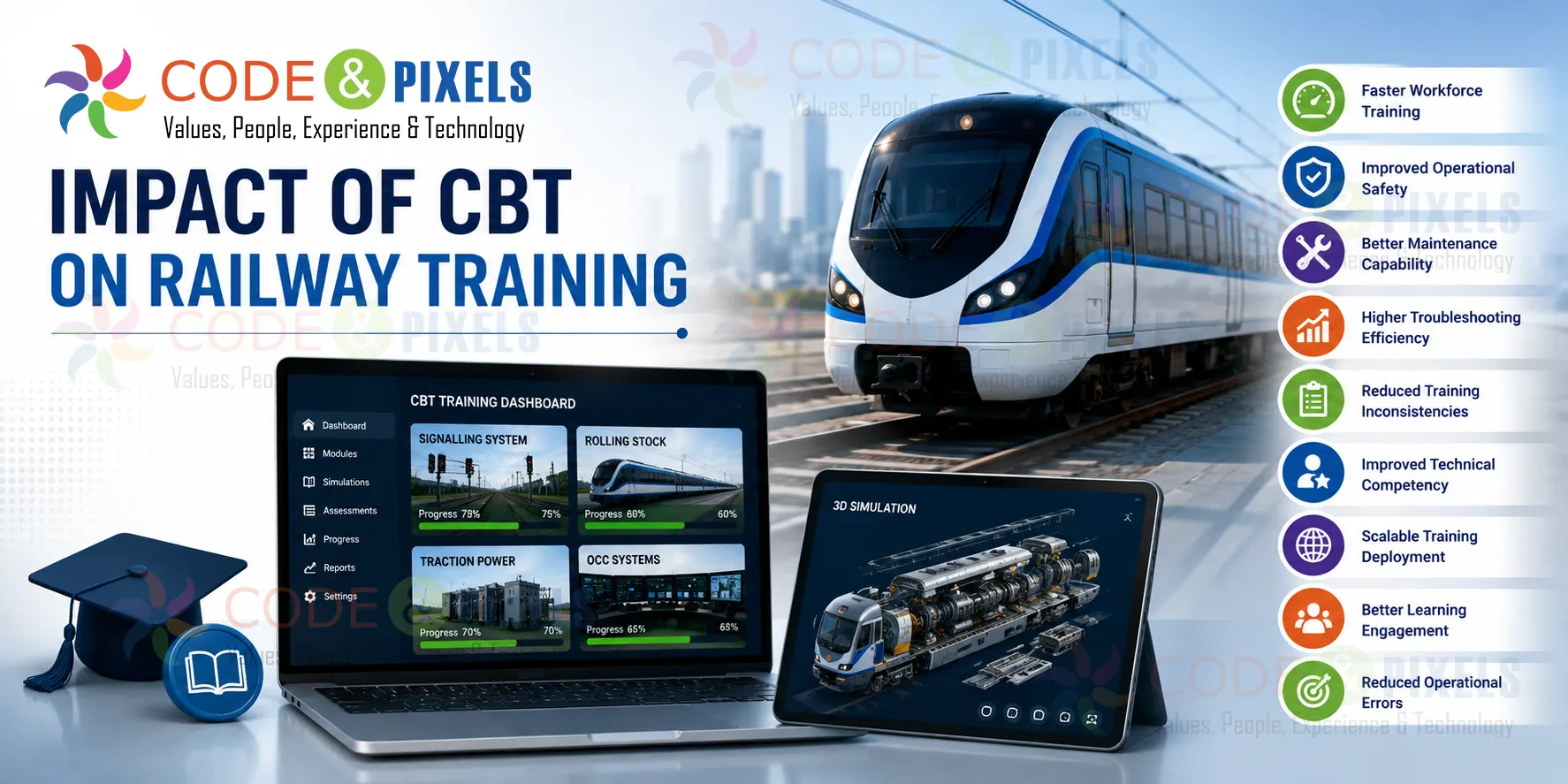
Modern railway projects require large scale technical training across multiple locations, system, and departments. Operators and maintainers need detailed understanding of equipment operation, subsystem interaction, safety workflows, maintenance procedures and troubleshooting methods.
CBT helps railway organizations by:
Simplifying Complex Systems
3D animations and simulations visually explain complex engineering concepts and equipment functionality.
Improving Technical Understanding
Interactive learning improves trainee engagement and helps learners understand systems more effectively.
Standardizing Training
All trainees receive the same structured learning content regardless of location.
Supporting Large Workforce Training
CBT enables scalable training deployment across multiple depots, training centres, and project locations.
Improving Maintenance Capability
Interactive troubleshooting modules improve fault diagnosis and maintenance skills.
Core Functionalities of Railway CBT Solutions:
Modern Railway Computer Based Training (CBT) modules are designed to provide an engaging and effective learning experience through a combination of interactive and multimedia based features. They typically include user friendly navigation that enables trainees to move easily through different learning modules at their own pace, along with high quality 2D and 3D animations that visually demonstrate railway systems, equipment operations, maintenance procedures and technical concepts.
Many CBT solutions also incorporate realistic simulations that replicate operational and troubleshooting scenarios, allowing trainees to gain practical experience in a safe virtual environment. Voice-over narration further enhances understanding by providing clear audio explanations that complement visual content and improve learner engagement.
To evaluate knowledge and monitor performance, Railway CBT modules often include interactive assessments such as quizzes, exercises and automated evaluations, while progress tracking features allow trainers and administrators to monitor learning completion and performance levels. Security features such as login and password protection help ensure controlled access to training content and user data. Additionally, bilingual or multilingual support can be incorporated based on project requirements, making the training accessible to a wider workforce and ensuring effective knowledge transfer across different language groups.
Applications of Railway CBT in Railway and Metro Projects:
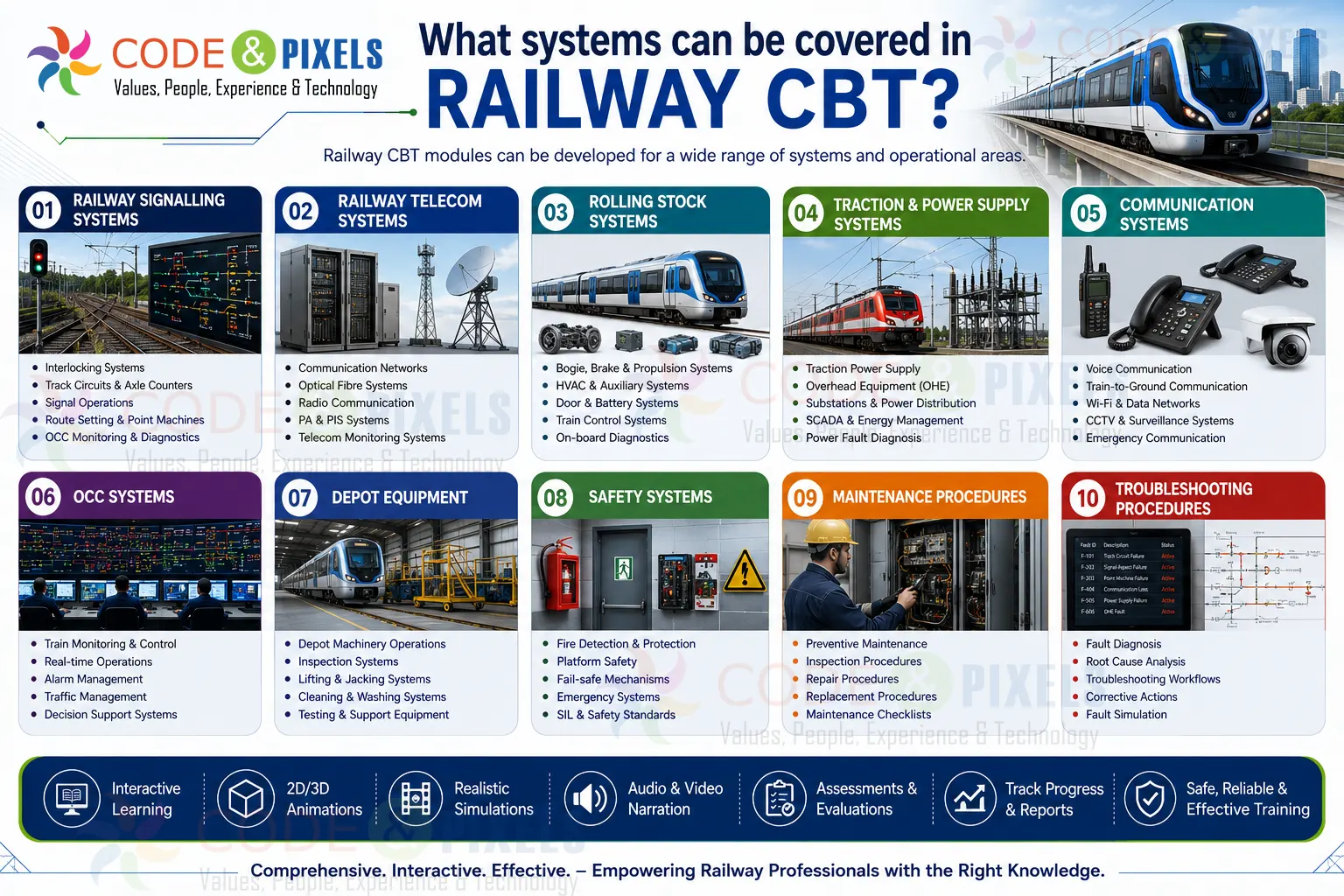
Railway CBT solutions can be developed for a wide range of railway systems and operational departments. Organizations use CBT to train personnel involved in railway signalling systems, telecommunications systems, rolling stock operations, traction and power supply systems, OCC operations, depot equipment, platform screen doors, automatic fare collection systems, safety systems and maintenance procedures.
CBT modules can be customized for operator training, maintainer training, technical certification programs, refresher training and safety awareness initiatives across metro rail, high speed rail, suburban rail and mainline railway projects.
Role of CBT in Modern Railway Infrastructure:
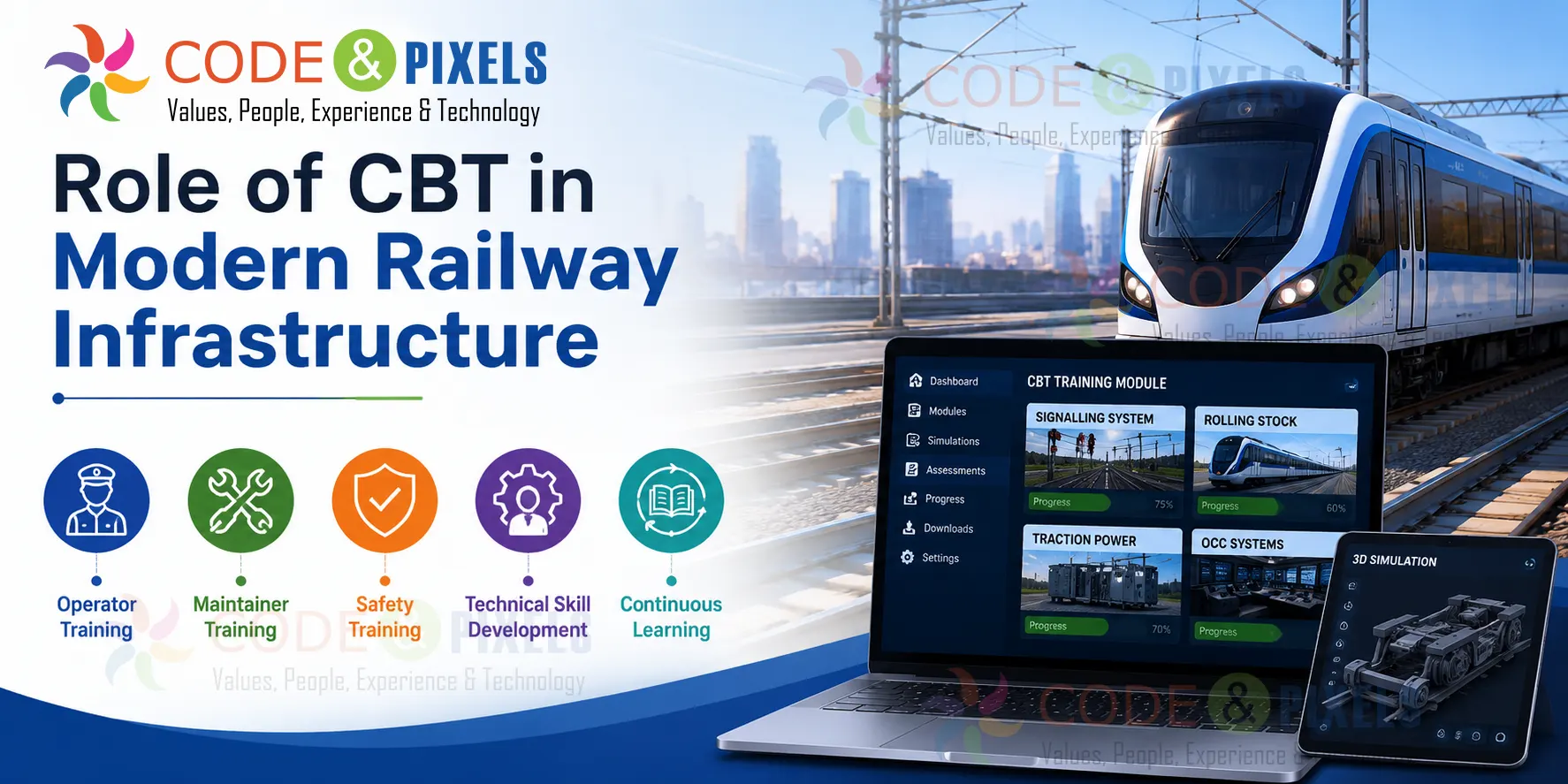
As railway infrastructure becomes more technologically advanced, Computer Based Training plays a crucial role in preparing the workforce to operate, maintain and manage modern railway systems effectively. CBT provides a structured and standardized training approach that helps railway personnel acquire the knowledge and skills required to work with complex equipment, signaling systems, communication networks and operational procedures. It ensures consistent training delivery across different locations while reducing dependence on traditional classroom-based instruction.
CBT supports operator training by improving understanding of system operations, alarm handling, operational procedures and safety practices. It also assists maintenance personnel in developing expertise in inspection, troubleshooting, preventive maintenance and repair activities. Furthermore, CBT enhances safety awareness, promotes continuous professional development and enables organizations to conduct refresher training whenever required. By supporting ongoing learning and workforce competency development, CBT contributes to improved operational efficiency, reduced human error and safer railway operations.
Conclusion: Our Role in Railway CBT Development
Code and Pixels specializes in the development of customized Railway Computer Based Training (CBT) solutions that combine technical accuracy with engaging multimedia learning experiences. Our team works closely with clients to transform complex railway concepts, operational procedures and maintenance practices into structured easy to understand training modules. Through effective instructional design, technical content organization and the use of interactive learning methodologies, we create CBT solutions that enhance knowledge retention and improve workforce competency.
Our expertise covers the complete CBT development lifecycle, including technical content structuring, instructional design, 2D graphics creation, 3D animation development, interactive simulations, troubleshooting modules, assessment integration. We deliver comprehensive multimedia learning solutions tailored to specific railway systems and training requirements. From initial requirement analysis and content planning to development, testing and final deployment, Code and Pixels provides end-to-end support to ensure the successful implementation of high quality Railway CBT programs.
Learn More or Request a Demo
Website: www.codeandpixels.net
Email: ietm@codeandpixels.net
Phone: +91 98495 27706
 |
GOPI KRISHNA GUDIVADA Leading the R&D and Project divisions at Code and Pixels and Digital Teacher, driving innovation in e-learning, IETM software, and Defence documentation solutions. With 23 years in content development and 15 years in Defence technical documentation, I bring deep expertise in designing and implementing IETM solutions aligned with JSG 0852 and S1000D standards. Passionate about creating world-class digital training systems for the Indian Armed Forces and advancing the standards of e-learning in India.    |
___________________________________________________________________________________________
Frequently Asked Questions (FAQs):
1. What is Railway CBT?
Railway CBT (Computer-Based Training) is a digital learning system used to train railway operators, maintainers, engineers and technical staff through multimedia-based learning modules.
2. Why is CBT used in railway projects?
CBT helps railway organizations provide standardized, scalable and interactive training while improving technical understanding and safety awareness.
3. What are the benefits of Railway CBT?
Benefits include better visualization, self-paced learning, repeatable training, automated assessments and improved workforce competency.
4. Who can use Railway CBT?
Railway CBT can be used by operators, maintainers, technicians, engineers, supervisors, trainers and other personnel involved in railway and metro infrastructure projects.
5. Can Railway CBT support multiple languages?
Yes. CBT solutions can be developed with bilingual or multilingual support to meet the training requirements of diverse workforces.
6. Why choose Code and Pixels for Railway CBT development?
Code and Pixels provides end-to-end Railway CBT development services, including instructional design, technical content structuring, 2D graphics, 3D animations, simulations, assessments, and multimedia learning solutions tailored to railway project requirements.


