Multi-OEM IETM Integration for Complex Defence Systems | Shipbuilding, Missiles & More
Modern defence platforms are no longer developed by a single manufacturer. Whether it is a warship, submarine, missile system, air-defence system, aircraft, UAV, radar or armoured vehicle, the final platform is typically an integration of numerous subsystems supplied by different OEMs.
Each OEM brings its own equipment, engineering expertise and technical documentation. The challenge begins when all this information has to come together as one coherent technical information system for the end user.
This is where Multi-OEM IETM integration becomes critical.
The Multi-OEM Challenge in Defence Programmes
Consider a modern warship.
The shipyard may be responsible for the overall platform, but the vessel can incorporate systems supplied by many different organizations:
- Propulsion and diesel engines
- Gearboxes and shafting
- Power generation and electrical systems
- Navigation systems
- Surveillance and fire-control radars
- Sonar systems
- Combat Management Systems
- Electronic Warfare systems
- Communication systems
- Missile and gun systems
- Torpedo systems
- HVAC and auxiliary machinery
- Fire-fighting and damage-control systems
- Pumps, compressors and other ship systems
Each subsystem may have a different OEM, different documentation structure and different maintenance requirements.
The final customer, however, does not want to manage dozens of disconnected documentation systems.
They need a single, structured and searchable technical information environment.
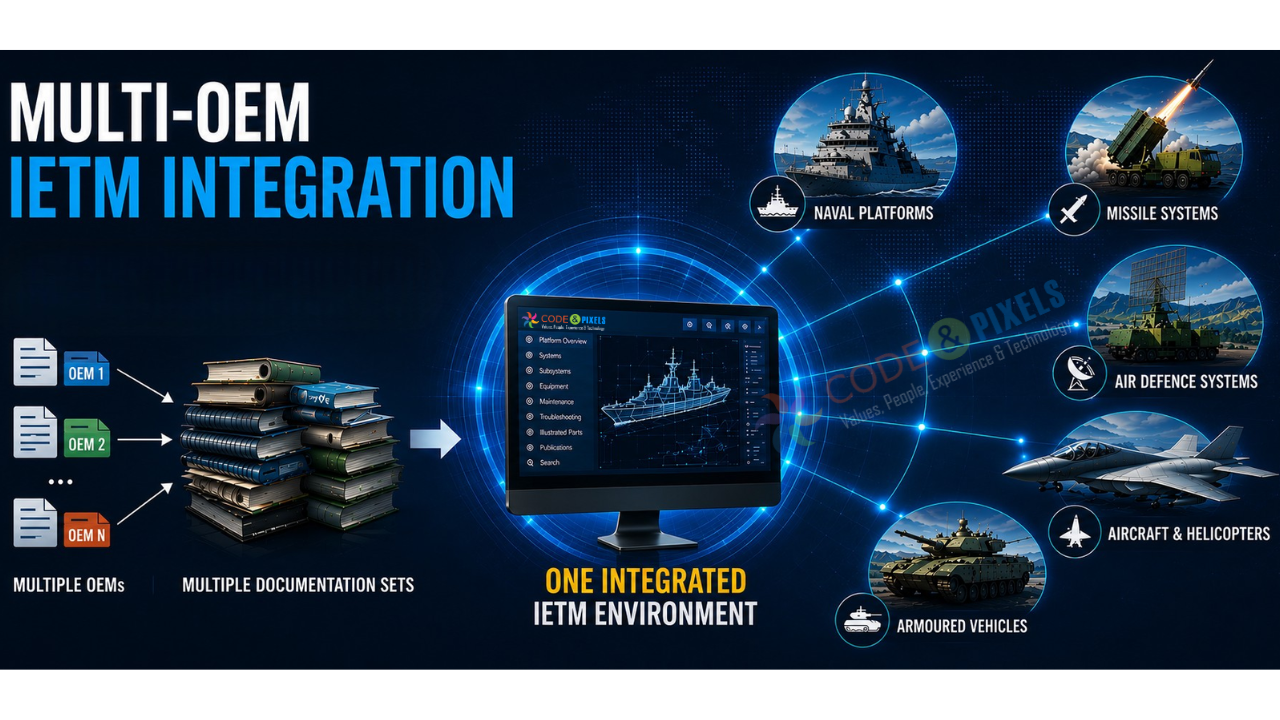
From Multiple OEM Manuals to One Integrated IETM
This is one of the most important roles of an Interactive Electronic Technical Manual (IETM).
Instead of treating every OEM's documentation as a separate manual, an integrated IETM can bring information together into a structured technical documentation environment.
The objective is simple:
Multiple OEMs. Multiple subsystems. One integrated technical information system.
This becomes particularly important when the platform contains thousands—or even tens of thousands—of pages of technical information.
Where Multi-OEM IETM Integration Matters Most
1. Shipbuilding and Naval Platforms
Warships are among the clearest examples of complex multi-OEM platforms.
A single vessel may integrate propulsion, navigation, radar, sonar, weapons, communication, electronic warfare, electrical and auxiliary systems from numerous suppliers.
For the shipbuilder and end user, the challenge is not merely creating individual manuals. It is creating documentation that allows personnel to understand, operate, maintain and troubleshoot the complete platform.
An integrated IETM can provide a structured way to navigate from the overall ship system down to individual equipment and maintenance information.
2. Missile Systems
A missile programme is also much more than the missile itself.
A complete missile system may include:
Missile + Launcher + Radar + Command & Control + Communication + Transporter + Power Systems + Test Equipment + Support Equipment
These components may involve multiple OEMs and specialist suppliers.
Consequently, the technical documentation for the complete system can become extremely large and complex.
A well-structured IETM can help integrate documentation across the different elements of the missile system while maintaining logical relationships between systems, subsystems, equipment and maintenance procedures.
3. Integrated Air Defence Systems
Modern air-defence systems bring together multiple technologies:
- Surveillance radar
- Tracking radar
- Missiles
- Launchers
- Command and control
- Communication
- Power systems
- Mobile platforms
- Test and diagnostic equipment
The final operational capability depends on all these elements working together.
The technical documentation therefore also needs to represent the relationship between these systems, rather than treating each piece of equipment as an isolated manual.
4. Aircraft and Helicopters
Aircraft programmes involve extensive integration between:
- Airframe
- Engines
- Avionics
- Radar
- Electronic Warfare
- Navigation
- Communication
- Weapons
- Hydraulic systems
- Electrical systems
- Ground-support equipment
With multiple OEMs involved, managing technical information becomes increasingly difficult as the platform evolves.
An IETM provides a digital environment in which information can be organized and accessed according to the user's operational and maintenance requirements.
5. UAV and UCAV Systems
Unmanned systems are another growing area of multi-OEM integration.
A UAV may combine:
Air Vehicle + Engine + EO/IR Payload + Data Link + Ground Control Station + Navigation + Communication + Mission Systems
Each subsystem can generate its own technical documentation.
An integrated IETM can bring this information together so that users do not have to search through disconnected documentation sources.
6. Armoured Vehicles and Weapon Platforms
Main battle tanks and other armoured platforms can involve OEMs for:
- Vehicle systems
- Engine
- Transmission
- Main weapon
- Fire-control system
- Sights
- Communication
- Protection systems
- Navigation
- Surveillance
Again, the challenge is integrating the information into a usable technical documentation structure for operators and maintainers.
The Real Value: Connecting the Information
The value of a modern IETM is not simply converting paper manuals into digital pages.
The greater opportunity is to connect technical information.
A user should be able to move logically from:
Platform → System → Subsystem → Equipment → Component → Procedure
and access the relevant technical information without having to search through multiple independent documents.
This can significantly improve the usability of technical documentation for complex defence platforms.
Scaling from 1,000 to 25,000+ Pages
The scale of documentation can vary dramatically between programmes.
A relatively compact equipment programme may require fewer than 1,000 pages.
A large defence platform can exceed 10,000 pages.
For extremely complex systems such as large naval platforms or major missile programmes, documentation can reach 25,000+ pages.
At this scale, documentation management becomes a programme-level challenge rather than simply a publishing exercise.
The IETM platform must therefore be capable of handling large volumes of information while maintaining a logical structure and efficient access.
Why Prime OEMs and System Integrators Need Multi-OEM IETM Solutions
For a prime contractor or system integrator, collecting documentation from multiple suppliers is only the beginning.
The bigger challenge is:
How do you transform documentation from different OEMs into one consistent technical information environment?
This involves dealing with:
- Different documentation formats
- Different information structures
- Different terminology
- Different equipment hierarchies
- Different maintenance procedures
- Large volumes of technical content
- Updates from multiple suppliers
- Integration of subsystem information
- Final customer usability
A dedicated IETM publishing environment can become the common platform for bringing this information together.
Quantum TechDocs: Built for Complex IETM Programmes
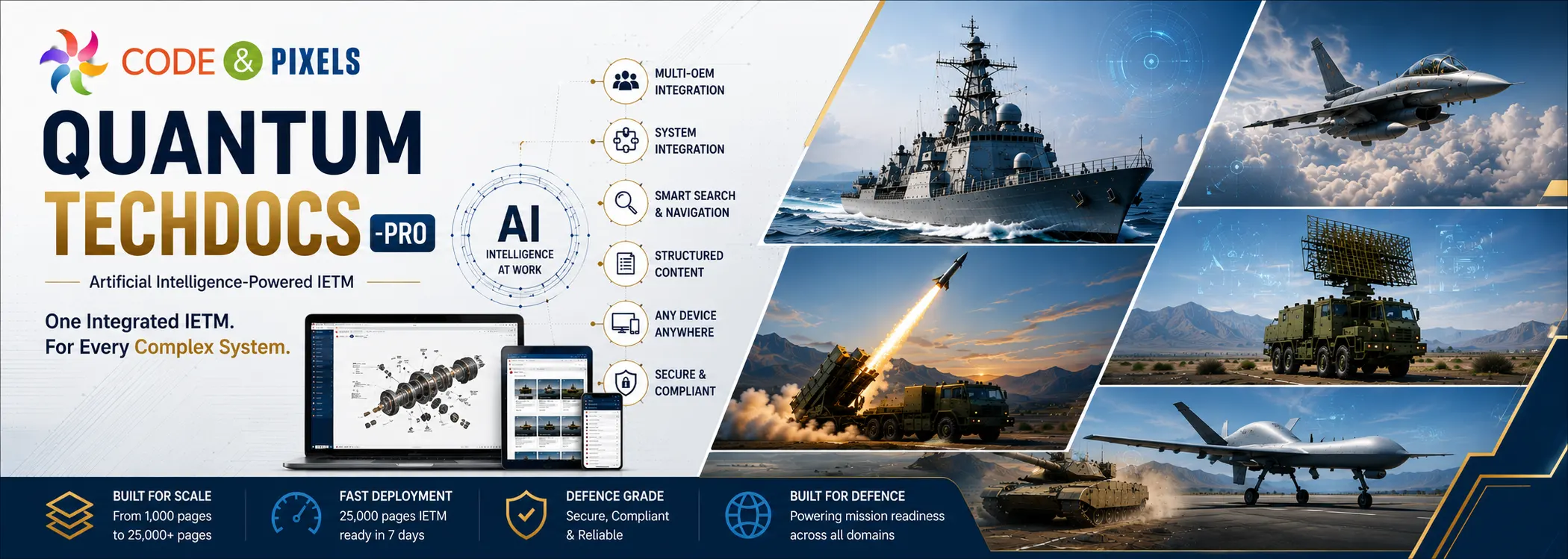
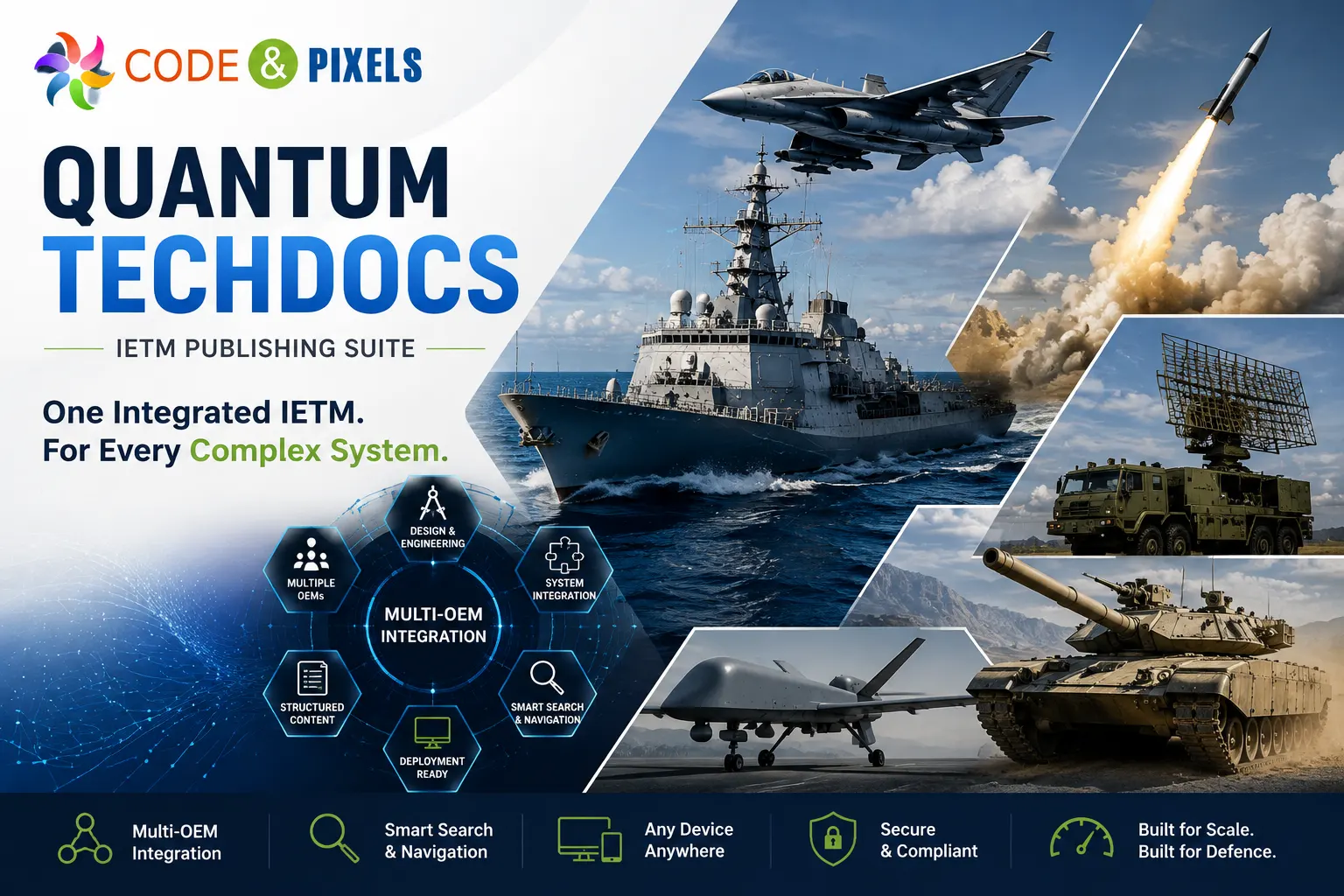
Quantum TechDocs – IETM Publishing Suite is positioned for defence programmes where technical documentation needs to scale from individual equipment documentation to large, complex multi-OEM systems.
The platform is particularly relevant to programmes involving:
Shipbuilding | Submarines | Missile Systems | Air Defence | Aircraft | UAV/UCAV | Armoured Vehicles | Radar | Electronic Warfare | Command & Control
The key proposition is not simply “more pages.”
It is the ability to support the transition from:
Multiple OEMs → Multiple Systems → Multiple Documentation Sets
to:
One Integrated IETM Environment
Conclusion
As defence platforms become increasingly sophisticated, the number of organizations contributing to a single system also increases.
A warship, missile system, aircraft or air-defence platform may contain hundreds of individual systems, components and pieces of equipment sourced from multiple specialist organizations.
The end user, however, ultimately needs one platform, one information environment and one reliable way to access technical information.
That is why Multi-OEM IETM integration is becoming an important consideration for defence OEMs, shipyards, system integrators and major platform developers.
The future of defence technical documentation is not simply digital manuals. It is integrated technical information for integrated defence systems.
Learn More or Request a Demo
Website: www.codeandpixels.net
Email: ietm@codeandpixels.net
Phone: +91 98495 27706
 |
GOPI KRISHNA GUDIVADA Leading the R&D and Project divisions at Code and Pixels and Digital Teacher, driving innovation in e-learning, IETM software, and Defence documentation solutions. With 23 years in content development and 15 years in Defence technical documentation, I bring deep expertise in designing and implementing IETM solutions aligned with JSG 0852 and S1000D standards. Passionate about creating world-class digital training systems for the Indian Armed Forces and advancing the standards of e-learning in India.    |
____________________________________________________________________________________________________________________________________
Frequently Asked Questions
1. How does Quantum TechDocs PRO support Defence documentation?
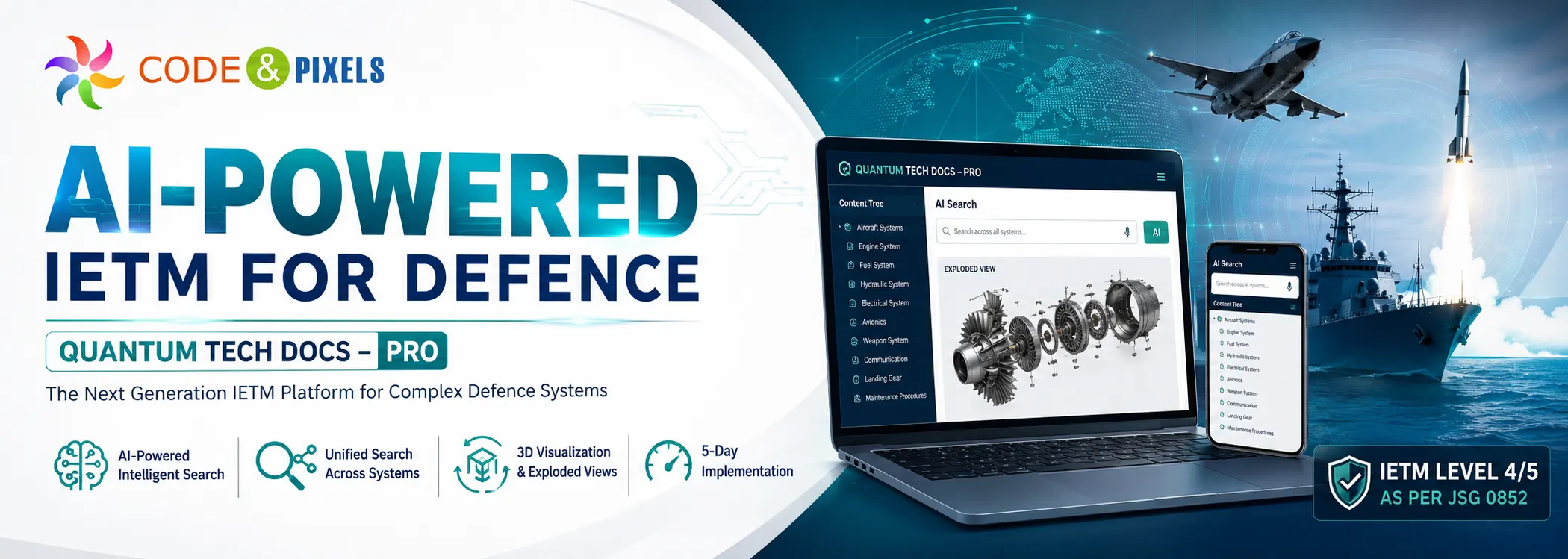
Quantum TechDocs PRO is designed specifically for complex Defence documentation environments. It can support technical documentation for missile systems, naval platforms, military vehicles, defence electronics, radar systems, and other engineering systems. The platform combines IETM capabilities with AI-assisted information retrieval and is built around JSG 0852.
2. Can AI-IETM systems support multiple OEM technical manuals?
Yes. One of the major challenges in large Defence programs is that different OEMs may provide separate IETMs with different interfaces, databases, navigation structures, and search mechanisms. An AI-IETM platform can help create a more unified information-access experience by enabling users to discover technical information across complex documentation environments.
3. How can AI reduce the time required to find information in technical manuals?
AI can understand user queries beyond simple exact keyword matching and help identify relevant information from large documentation repositories. Instead of manually opening multiple documents and navigating through different sections, users can ask questions in natural language and receive more relevant information from the available technical content.
4. How can AI-IETM improve technical documentation for shipyards?
Shipyards manage complex platforms containing numerous systems and subsystems supplied by multiple organizations. AI-IETM technology can provide a more efficient way to access large volumes of technical documentation. It can help users search information using natural-language queries and improve access to maintenance and operational documentation.
5. Is Quantum TechDocs PRO suitable for missile documentation?
Yes. Quantum TechDocs PRO is designed for complex Defence applications including missile systems. Its AI-assisted information retrieval capabilities can help organizations manage and access large volumes of technical documentation associated with complex equipment, subsystems, maintenance procedures, and operational information.
6. Can AI-IETM technology be used for military vehicles?
Yes. AI-powered IETM platforms can be applied to military vehicles and other complex Defence equipment. They can provide structured access to technical manuals, maintenance procedures, equipment information, and troubleshooting content while making large documentation repositories easier for maintenance personnel to search.


